
Hopkins Auto Body 1 Explains Why Corrosion Protection Matters After Auto Body Repair
Hopkins, MN - October 06, 2026 - PRESSADVANTAGE - Hopkins Auto Body 1 is publishing consumer guidance explaining why
Press Release Disclaimer: This is a press release distributed through the XPR Media network. It has not been independently verified by our newsroom.

Hopkins, MN – October 06, 2026 – PRESSADVANTAGE –
Hopkins Auto Body 1 is publishing consumer guidance explaining why corrosion protection can be part of collision repair when damage or repair procedures disturb factory-applied coatings and protective materials. The September resource focuses on work that often becomes hidden once panels are refinished and the vehicle is reassembled.
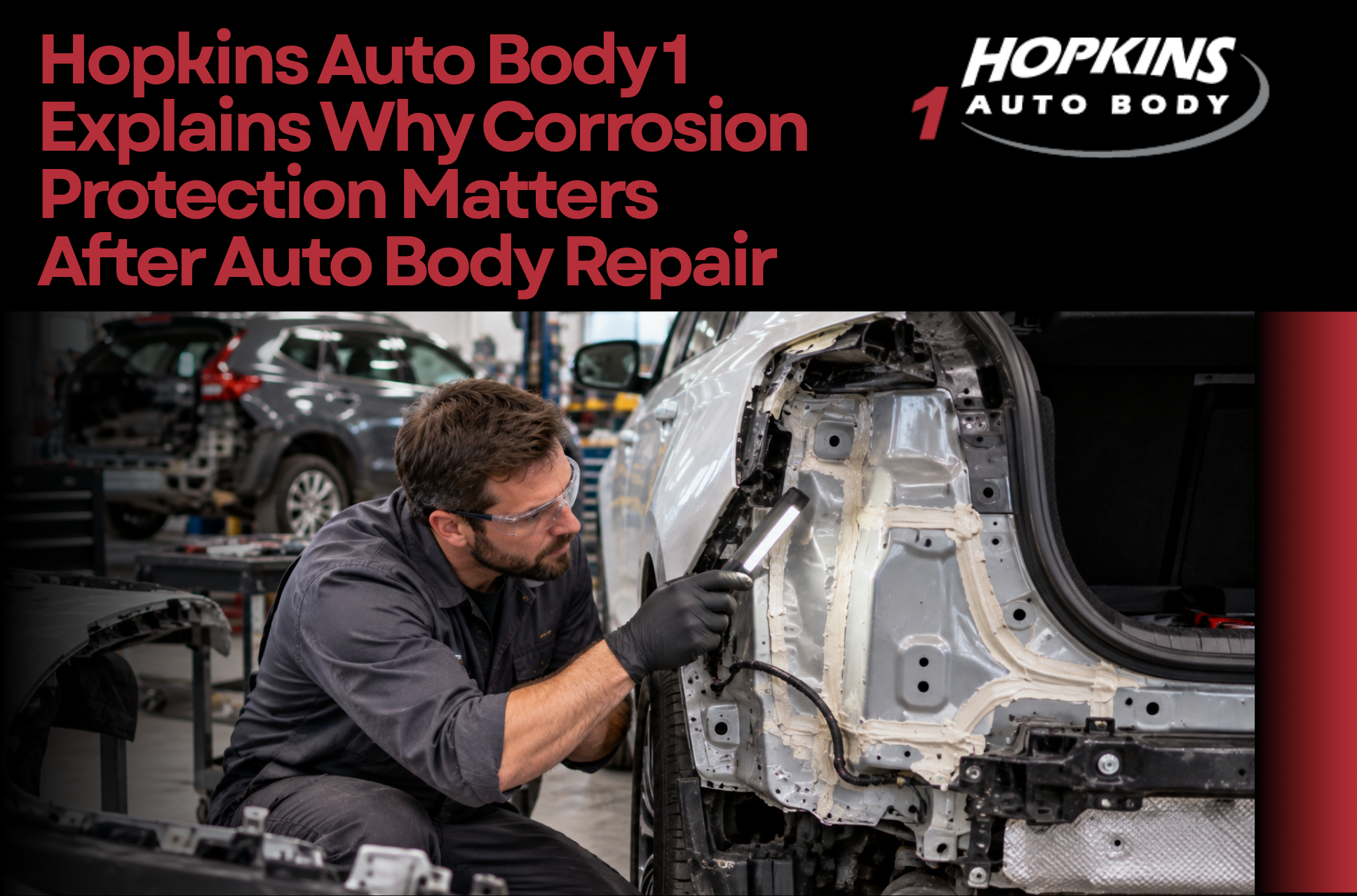
Vehicles can contain primers, seam sealers, cavity protection, undercoatings, and other protective materials in different areas of the body. Collision damage can disturb these materials by exposing metal, damaging seams, or deforming protected panels. Repair operations such as sanding, grinding, welding, cutting, straightening, or panel replacement can also affect existing coatings around the repair area.
The new guidance gives consumers a straightforward way to understand the issue: when collision damage or the required repair process disturbs existing protection, the repair plan can identify the protective materials and procedures applicable to that area.
Hopkins Auto Body 1 provides local repair services through the Hopkins Auto Body 1 location at 10889 Excelsior Blvd.
Panel repair provides one example. A shallow dent that can be corrected without significantly disturbing surrounding materials presents different considerations from damage requiring extensive surface preparation. When repair work exposes bare metal or removes existing coatings, surface preparation and applicable protection can occur before refinishing is completed.
Panel replacement can involve additional steps because technicians may need to work at factory seams or joining points. Removing a damaged component can expose areas that were protected during manufacturing. Applicable protective materials can then be restored during the repair while those areas remain accessible.
Seam protection is another less-visible part of some repairs. Vehicle bodies contain locations where separate pieces of metal are joined. When collision damage or repair work affects a protected seam, manufacturer repair procedures can help identify the materials and processes specified for that area.
This is also relevant inside enclosed or partially enclosed body areas. Doors, rocker panels, quarter panels, pillars, rails, and other structures can contain surfaces that are difficult for a vehicle owner to see after reassembly. If collision repair affects one of these areas, applicable protection may need to be addressed before access is closed.
The distinction helps explain why visible appearance alone does not describe every operation performed during an auto body repair.
Drivers can readily evaluate whether exterior paint appears consistent or whether repaired panels are properly aligned. Corrosion-protection work may be concealed behind those finished surfaces. The September guidance is intended to help consumers understand why repair estimates can include materials or labor that do not create an obvious cosmetic change.
Paint damage provides a more visible example of the same principle. Automotive coating systems provide color and finish while also covering the underlying surface. When collision damage penetrates those coatings, repairing the area can involve restoring the applicable layers rather than simply covering the visible mark.
Minnesota conditions add practical relevance to the topic. Vehicles in Hopkins encounter seasonal moisture, snow, road grime, and winter road treatments. This does not mean every scratch or damaged panel will develop corrosion. Instead, it reinforces why surfaces disturbed during collision repair may need appropriate treatment as part of the repair process.
The procedures are not identical for every vehicle. Manufacturers use different combinations of conventional steel, high-strength steel, aluminum, plastics, adhesives, welds, rivets, and other materials and joining methods. Repair planning therefore considers the material, affected component, damage, and applicable manufacturer repair procedures before determining how an area should be treated.
That planning is part of the broader auto body repair process available through Collision Center 1. Damage analysis identifies affected areas, while the repair plan can account for panel repair or replacement, joining procedures, surface preparation, refinishing, applicable corrosion protection, and reassembly.
Timing can be important for procedures that later become difficult to access. Some protective materials may need to be addressed while panels, liners, or trim are removed. Other operations may occur after a component has been joined but before the repaired area is closed during reassembly.
For consumers, this creates a useful distinction between the visible result and the complete repair process. Paint appearance and panel alignment are noticeable parts of the finished vehicle, while preparation and protective procedures can remain concealed behind the repaired exterior.
The September resource centers on that distinction rather than treating corrosion protection as a generic service added to every repair. Its main consumer takeaway is that protective materials should be considered when collision damage or manufacturer-specified repair procedures disturb them. What applies depends on the vehicle, material, damaged area, and repair being performed.
Understanding this part of the process can also make a collision repair estimate easier to interpret. An operation involving seam sealer, cavity protection, surface preparation, or another protective material may not produce a visible change once the vehicle is complete, but it can correspond to work performed on an area affected during the repair.
Hopkins Auto Body 1 has served the Hopkins community since 1962 and operates as part of Collision Center 1. The shop is located at 10889 Excelsior Blvd, Hopkins, MN 55343 and provides auto body and collision repair services for local drivers.
###
For more information about Hopkins Auto Body 1, contact the company here:
Hopkins Auto Body 1
Jerald Stiele
(952) 935-7556
kburke@collisioncenter1.com
10889 Excelsior Blvd, Hopkins, MN 55343
